
Specification-driven, not vibe-driven
AI makes software development faster, provided it stands on the right foundation. At Van Kessel IT we therefore do not start with code, but with specifications. We map your needs in detail and capture them in structured documents: entities, processes, screens, rules and constraints. Only when that foundation is right do we start building.
That clearly sets our approach apart from vibe coding: improvising with a chat prompt and hoping working software comes out. For business software, and certainly for ERP, that is not an option. The specification is the truth; AI is the tool that helps us turn that truth into working software faster.
Step 1: Capturing needs in specification documents
Together with you, we map your business processes and translate them into clear specification documents. Not loose notes, but a coherent whole that is readable for us and for you.
Domain model: which entities play a role, and how do they relate?
Processes and workflows: which steps, which decisions, which exceptions?
Screens and interactions: who sees what, who does what, and when?
Rules and constraints: what must always hold, what must never happen?
These documents are not disposable. They stay with the project throughout as a living reference, for changes, extensions and delivery.
Is there a system already? Then that is the specification
In modernisation the specification already exists: the source code and table definitions of your current system record exactly what it does. We convert that code with AI to modern Java and Wercstat ERP. There is no months-long requirements phase to write or argue about, which is why a conversion can be done at a fixed price. What happens to parts that are no longer needed follows from an analysis up front (modernisation).
Step 2: AI and framework skills speed up the build
With the specification as the starting point, we put our AI skills and our Wercbanc framework to work. The skills read the model, recognise patterns that keep recurring in ERP projects, and generate what would otherwise be manual work: screens, forms, overviews, integrations, workflow steps.
Because the framework is model-driven and type-safe, that speed does not produce a mess. What is generated is consistent with the rest of the system, errors are caught at compile time, and every generated part can be refined by hand where the domain calls for it.
Step 3: Reviewed, not let loose
AI supports us; it does not steer. Every step goes through a structured review:
Code review: no line reaches production unseen.
Automated tests: all business functionality is verified with automated tests that run with every change.
Checking against the specification: what is built must demonstrably cover what was agreed.
That way we combine the speed of AI-driven development with the solidity that business software needs. No surprises afterwards, no black-box code nobody dares to touch any more.
Step 4: Implementation and further development
Delivery follows the specification and the tests that go with it. What we agreed is what you get, and it demonstrably works. Implementation happens in short iterations with direct feedback, so disruption of your business is kept to a minimum.
And because the specification documents grow with your business, further development stays as structured as the first delivery. New modules, changes to existing functionality, integrations with new systems, always via the same route: specify, generate, review, deliver.
Step 5: Support in operational use
An application is not finished at delivery. As soon as it runs in production, support begins. Van Kessel IT keeps an active role in it, as light or as intensive as you wish.
Central error logging: all warnings and errors the application produces are collected automatically in the cloud and stay visible there. Nothing gets lost between separate log files on separate servers.
Priority-based notifications: depending on severity, notifications are emailed to your own support department, to Van Kessel IT, or to both. Critical errors reach the right place straight away, without anyone having to dig through logs by hand.
Operational statistics: the application continuously reports how it is used: which screens, which processes, which lead times, which peak moments. Those statistics are available to your own IT department and to Van Kessel IT as the administrator in the cloud.
Shared support: you decide who picks up what. If you have your own IT department, Van Kessel IT acts as second line for matters that touch the framework or the generative layer. If you do not have that capacity in house, Van Kessel IT takes on the full operational support.
That way the application does not become a black box after delivery, but a system that is actively monitored, adjusted and developed further based on what happens in practice. How that works out in practice is in We spotted the problem a day before the client noticed it.
About Van Kessel IT
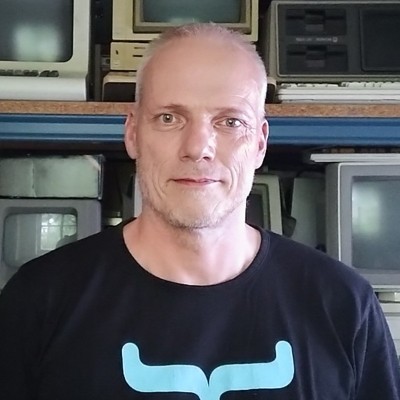
Van Kessel IT was founded by Marc van Kessel, who has worked on ERP systems since 1996: customisations on Baan and Infor LN, integrations, and since 2008 a framework of his own in Java. Wercstat ERP and Wercbanc grew out of that, the products Van Kessel IT builds and introduces at customers.
The company is based in Deurne and works for trade and production companies in the Netherlands. Some customer relationships go back more than twenty years (cases). Company details and address are on the contact page.
Ready to get acquainted? Schedule a no-obligation call.